A direction for your next space
Minimalist Exterior with Mixed Siding
About this design
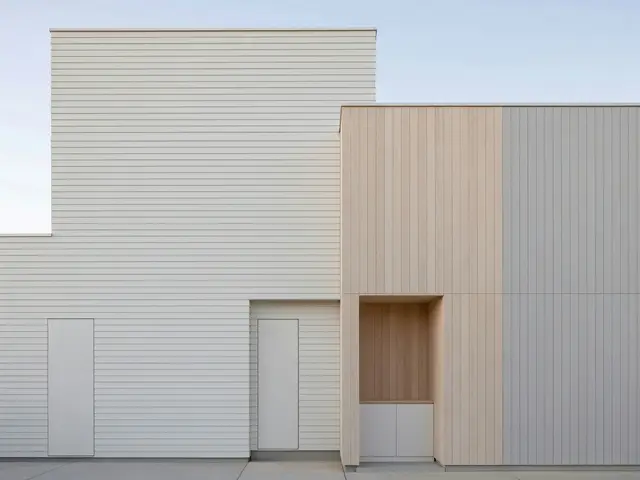
This minimalist facade uses simple siding materials to define separate volumes across a two-story elevation. The left section features horizontal cream-colored lap siding that wraps around squared forms, while the right volume contrasts with vertical wood-toned boards. Recessed areas create shadow lines and depth, including a small alcove at ground level that interrupts the vertical siding. The palette stays quiet with pale neutrals and light natural wood, and clean geometric shapes replace decorative trim.
Design this look with your photo ↗Your room photo + this reference. Review the studio allowance before generating.
What stands out
- Horizontal cream lap siding on the left volume contrasts with vertical wood slats on the right, distinguishing separate masses without ornament or color variation beyond tonal shifts.
- Flush-mounted doors in matching finishes blend into their respective siding types, preserving unbroken surfaces and eliminating visual clutter from traditional door trim and hardware.
- A small recessed alcove in the vertical wood section provides functional depth while breaking up the flat plane, creating shadow play that adds dimension without applied decoration.
- Aligned siding joints and consistent reveals maintain crisp geometry across both horizontal and vertical applications, supporting the restrained aesthetic through precision and repetition.
Make it work in your space
On a smaller single-story home, apply the horizontal and vertical siding contrast to different sections rather than stacking them vertically. Use the material change to mark functional zones like garage versus living areas. Skip recessed alcoves if the budget is tight and rely solely on siding direction and tone to define volumes. Flush doors cost more than standard types, so prioritize them at the main entry and use simpler options elsewhere. The cream and wood palette works at any scale without added expense.
Align material transitions with architectural breaks rather than arbitrary stripes.
Materials and finishes
- Horizontal lap siding
- Look for smooth profiles with consistent reveal widths. Tight joints and uniform color prevent a busy appearance. Prefinished options reduce maintenance and ensure even weathering.
- Vertical board siding
- Choose boards with minimal grain variation for cohesive appearance. Consistent spacing between boards matters more than width. Consider how fasteners will be concealed or integrated.
- Flush exterior doors
- Select doors that sit flush with surrounding siding rather than projecting. Match finish to adjacent material. Integrated handles maintain clean lines better than protruding hardware.
- Recessed entry alcoves
- Plan depth to create visible shadow without collecting water. Waterproofing transitions between horizontal and vertical surfaces requires careful detailing at corners and sills.
- Light wood stain finish
- Select translucent stains that show grain while providing UV protection. Test samples for color shift when wet. Reapplication intervals depend on exposure and climate.
More Minimalist Exterior Ideas
Your questions, answered
How do you transition between horizontal and vertical siding on the same exterior wall?
Use a corner trim piece or metal flashing to create a clean vertical break between the two siding orientations. The trim should be narrow and in a matching or neutral tone to maintain minimal appearance. Ensure proper waterproofing behind the transition, as direction changes can create vulnerable spots for moisture infiltration. Some installers butt the materials directly with caulk, but a slim reveal typically weathers better over time.
How do I try this look in my own space?
Choose Design this look and upload your own photo in the studio. This concept is loaded separately as a reference, and its design direction is included in the editable brief. Review your options before generating.
Can I buy the exact furniture and materials shown?
This is an AI-generated concept, not a catalog of real products. Use the image to compare shapes, colors, and materials, then verify dimensions and finishes with actual suppliers.